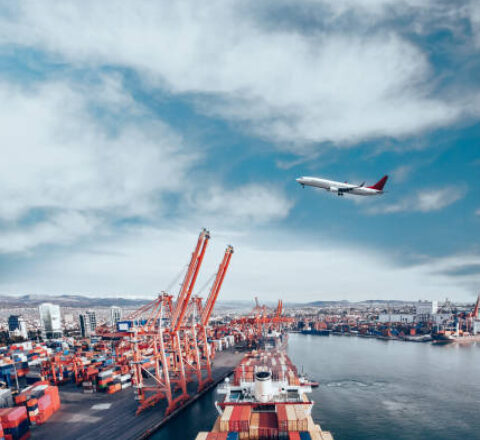
Export air and sea freight services are fundamental to international trade, enabling businesses to move goods from their home country to global markets efficiently and securely. These services involve careful coordination of transportation, documentation, customs procedures, and delivery logistics to ensure that shipments reach their destination on time and in compliance with international regulations.
Air freight services are the preferred choice for exporters dealing with time-sensitive or high-value goods. Products such as electronics, pharmaceuticals, fashion items, and perishable commodities often rely on air transport due to its speed and reliability. Export air freight begins with cargo booking and packaging, followed by the preparation of an airway bill and other necessary export documents such as invoices, packing lists, and export declarations. Once cleared by customs, the cargo is loaded onto aircraft and transported to the destination airport. Upon arrival, it undergoes import clearance before being delivered to the consignee. Although air freight is generally more expensive, it offers shorter transit times, reduced risk of damage, and enhanced security.
Sea freight services, in contrast, are widely used for exporting large volumes of goods at a lower cost. This method is ideal for bulk shipments, heavy machinery, raw materials, and non-urgent cargo. Exporters can choose between Full Container Load (FCL) and Less than Container Load (LCL) options. FCL is suitable when goods can fill an entire container, offering more control and security, while LCL allows smaller shipments to share container space, making it a cost-effective option. The export sea freight process includes container booking, cargo stuffing, documentation preparation, customs clearance, and coordination with shipping lines. After customs approval, the container is loaded onto a vessel and transported to the destination port.
Documentation plays a critical role in export freight services. Key documents include the commercial invoice, packing list, bill of lading (for sea freight), airway bill (for air freight), export licenses, and certificates of origin. Accurate and complete documentation ensures smooth customs clearance and prevents delays or penalties. Freight forwarders and logistics providers often assist exporters in managing these requirements and ensuring compliance with international trade laws.
Another important aspect of export freight services is cargo handling and packaging. Proper packaging is essential to protect goods during transit, especially for long sea journeys or multiple handling points. Exporters may also opt for additional services such as cargo insurance, labeling, palletization, and door-to-door delivery, which enhance safety and convenience.
Technology has greatly improved the efficiency and transparency of export logistics. Advanced tracking systems allow exporters to monitor shipments in real time, while digital platforms simplify documentation and communication. This helps businesses plan shipments more effectively and respond quickly to any disruptions.
In conclusion, export air and sea freight services are vital for connecting businesses to global markets. Air freight provides speed and reliability for urgent shipments, while sea freight offers economical solutions for large-scale exports. With proper planning, accurate documentation, and the support of experienced logistics providers, exporters can ensure smooth operations and maintain competitiveness in international trade.